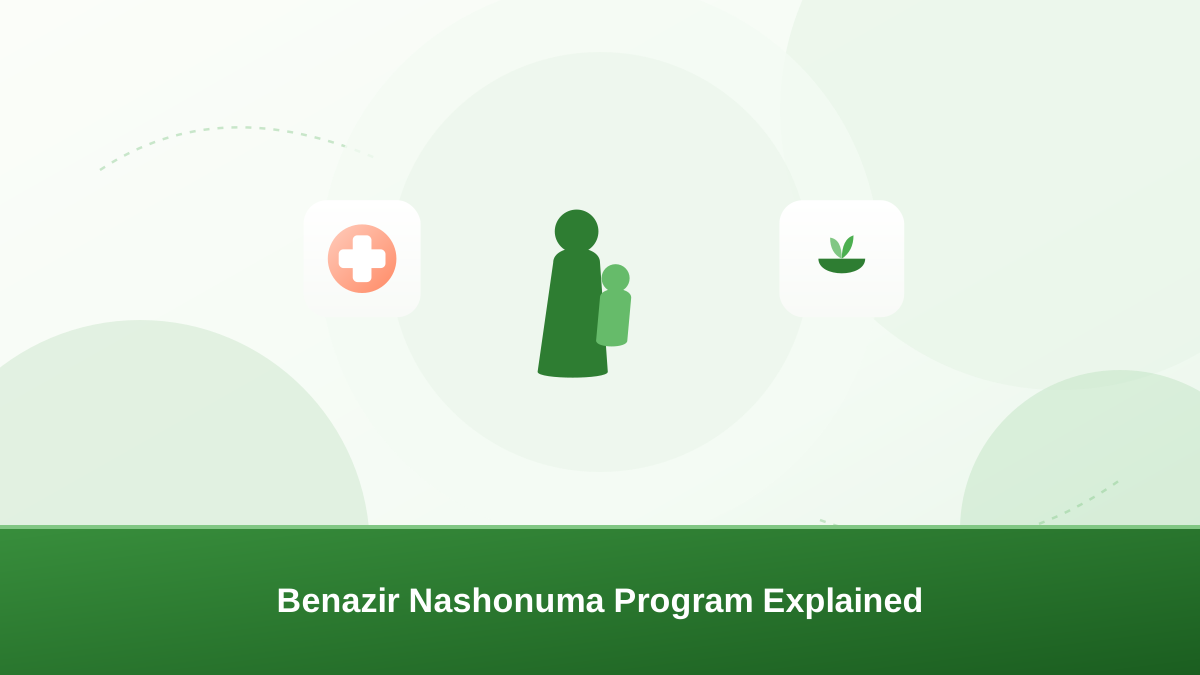
If you have heard of Benazir Nashonuma but are not sure exactly what it is, this guide explains it in simple, plain language. Nashonuma is a health and nutrition support program linked to BISP. It focuses on mothers and young children, and it works alongside the better-known cash transfers.
This guide covers what the program is generally for, who it typically helps, and how enrolment and notification work. It also explains how to verify the current Benazir Nashonuma details through official channels before you plan around them.
What is the Benazir Nashonuma program?
Benazir Nashonuma is a health and nutrition initiative run under the BISP umbrella. The word “Nashonuma” means growth and development. Instead of acting as a separate cash payment, the program is designed to encourage good nutrition and health care for mothers and children in their early years.
The program complements the main BISP cash transfers. A family that already receives cash support may also be linked to Nashonuma services where the program is active. The exact services, enrolment windows, and benefits change over time, so the details below describe the general design rather than a fixed official rulebook.
Who does the program help?
Nashonuma is a conditional support program for maternal and child health and nutrition. It is typically aimed at two broad groups:
- Pregnant women in beneficiary households, who need extra nutrition during pregnancy.
- Breastfeeding (lactating) mothers, who need good nutrition for both themselves and their baby.
- Young children, particularly in their first years of life, when nutrition has the biggest effect on growth and development.
In practice, families who are already connected to BISP are usually the ones considered for Nashonuma support. Being part of a BISP household is not the same as being guaranteed a place in Nashonuma. Eligibility and enrolment are confirmed through official BISP channels, not assumed.
Why health and nutrition support matters
Good nutrition in the early years shapes a child’s growth, learning, and long-term health. Pregnancy and breastfeeding also place extra demands on a mother’s body. When support is tied to health services, families are encouraged to attend check-ups they might otherwise skip.
This is the idea behind a conditional program. Support is connected to actions such as attending health visits and nutrition counselling, so families receive help while also caring for their health. The result is usually better growth for children and better care for mothers.
What the program typically involves
Because Nashonuma details can differ by area and by phase, treat this section as a general description rather than a fixed list. The program is usually built around:
- Health check-ups for mothers and children at linked health facilities.
- Nutrition counselling on what to eat during pregnancy, breastfeeding, and early childhood.
- Food supplements or fortified nutrition products to support growth, where these are available.
- Growth monitoring for young children, so that problems are spotted early.
Support is often tied to regular attendance. Families are usually asked to keep appointments and complete check-ups on schedule. The health visit is part of the condition, not just a formality.
How support is delivered can also vary. Some areas make supplies available at linked health centres. Others connect mothers to counselling sessions and growth checks. Always confirm what is active in your locality before planning around it.
How Benazir Nashonuma differs from BISP Kafaalat
Families often confuse Nashonuma with Kafaalat, but they are separate programs. Kafaalat is the main quarterly cash transfer to eligible households. Nashonuma is a health and nutrition program. Its support is tied to health services rather than being a standalone cash payment.
The two programs work under the same BISP umbrella and often overlap in the same households. A family in Kafaalat may also be linked to Nashonuma where it is active, but the two are not the same thing. If you are new to BISP as a whole, start with our guide on what BISP is and how it works.
How enrolment and notification work
Nashonuma enrolment is not something you complete on your own online. In general, the process runs through BISP and its allied centres:
- BISP offices and linked health facilities can tell you whether Benazir Nashonuma enrolment is open in your area.
- Eligible mothers are usually identified through BISP records and linked to a nearby health centre.
- You may receive an SMS or visit-based notification when enrolment drives or checks are scheduled.
- To enrol, you are normally asked to bring your CNIC and your child’s health records.
Notification methods change by phase and by district. One area may send SMS messages, while another informs families during a health facility visit. Do not assume your family is auto-registered. Check with an official source that your records are correct.
For help reading SMS replies or checking your record, see our guide to checking your BISP status online.
What documents to prepare
Going to a BISP office or health facility prepared saves a return trip. The exact list can differ by area and phase, but these items are commonly requested:
- Your original CNIC of the head of household or the beneficiary.
- Photocopies of the CNIC (front and back), which some offices ask for.
- Your child’s health records, such as a vaccination card or growth monitoring card.
- Any previous BISP letters or SMS printouts that help staff find your file quickly.
Ask before you visit which documents apply to your case. The list above is a starting point, not a fixed official requirement.
How to check whether you are eligible
Eligibility for Nashonuma is decided by BISP using its official records, not by any private agent. If you want to know whether your household is being considered:
- Ask at your nearest BISP office whether Nashonuma is active in your area.
- Ask at the linked health facility that serves your locality.
- Keep your CNIC and your child’s health records ready for any checks.
- Confirm everything against official BISP responses before you plan around the program.
Being part of a household already linked to BISP support is a common starting point, but it does not by itself confirm eligibility for Nashonuma. There is no substitute for asking the official channels directly.
Common misunderstandings
Several mix-ups about Nashonuma are extremely common. Here is how to think about each one:
- “Nashonuma is a cash payment.” It is not. It is a health and nutrition program whose support is tied to health services, check-ups, and food supplements.
- “Every BISP family is automatically enrolled.” Enrolment is usually needed, and it is confirmed through official channels. It is not automatic for every household.
- “It is the same as Kafaalat.” No. Kafaalat is the main cash transfer, while Nashonuma is a separate program focused on mothers and young children.
- “An agent can enrol me for a fee.” No. This is a warning sign of a scam. BISP services are free through official channels.
When you hear something surprising about the program, check it against official BISP announcements before acting. Our guide on spotting fake BISP news explains how to separate real messages from rumours.
Verifying current program details officially
The safest way to stay up to date is to use official BISP channels. These are the places to confirm the current rules, enrolment windows, and services:
- The official BISP website for program announcements.
- Your nearest BISP district or tehsil office for area-specific details.
- Linked health facilities that run Nashonuma activities.
- The BISP SMS shortcode 8171 for status checks using your registered CNIC and mobile number. See our family eligibility check guide for how it works.
- The official BISP helpline for questions. See our guide to using the BISP helpline safely.
Program details such as services, enrolment windows, and benefits do change. A detail that was true last year may not be true today. Always check the current announcement instead of relying on memory or messages from unofficial sources.
Conclusion
Benazir Nashonuma supports the health and nutrition of mothers and young children under the BISP umbrella. It is a separate program from the main cash transfer, and its support is tied to health check-ups, nutrition counselling, and food supplements.
Enrol through official channels, keep your CNIC and health records ready, and always confirm the current program details from official BISP sources.
Frequently asked questions
No. Kafaalat is the main cash transfer; Nashonuma is a separate health and nutrition program focused on mothers and young children.
Enrolment is usually required. Ask at a BISP office or linked health facility whether it is open in your area.
Your CNIC and your child's health records are commonly needed. Confirm the exact list for your area officially.
No. Nashonuma is a health and nutrition program whose support is tied to check-ups, nutrition counselling, and food supplements, not a standalone cash payment.
In general, mothers and young children in households already linked to BISP support are the focus. Confirmation of eligibility and enrolment windows is done through official BISP channels.
Use official channels only: the BISP website, 8171 status checks with your CNIC, the official helpline, or a visit to your nearest BISP office. Details change, so confirm before relying on any message.