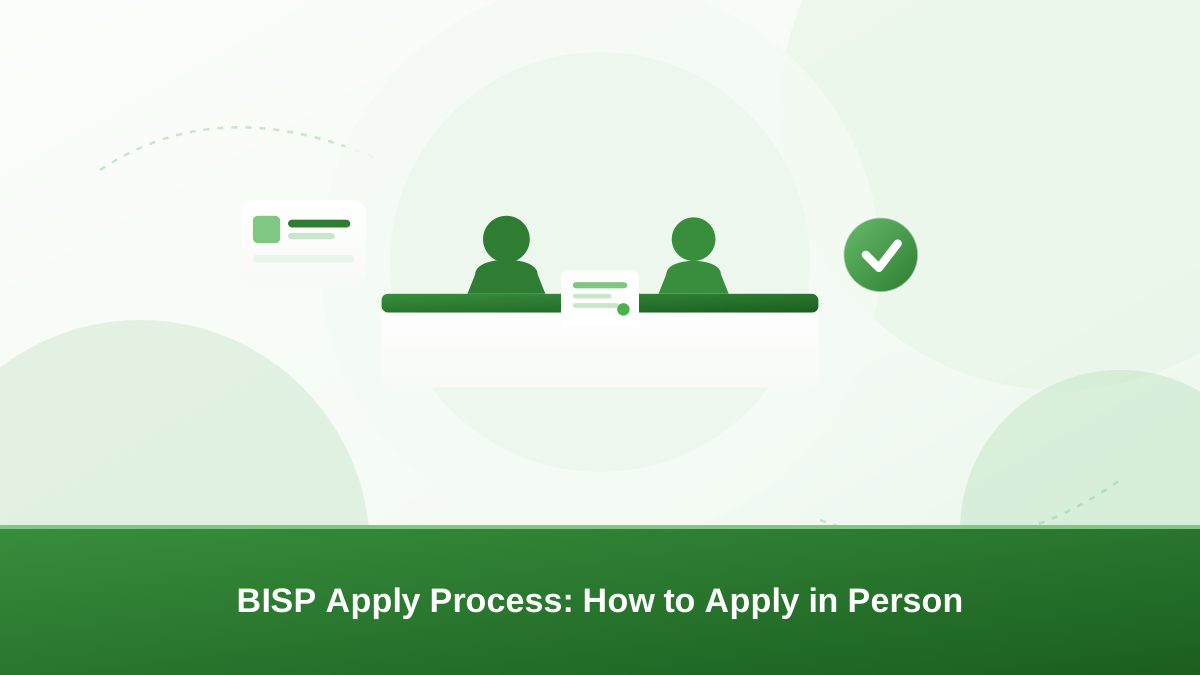
The BISP apply process can be done in person, and many families prefer it. You can ask questions face to face. This guide explains how in-person applications work, who can apply, what documents to prepare, and what happens after the survey. It also shows what the survey includes and why certain details are asked.
Who can apply in person
The BISP apply process is for households that have not yet been surveyed or registered. You normally apply for the whole household in one go. The survey is usually completed by the head of the household, in most cases an adult woman. Widows, divorced women, and families caring for disabled members use the same in-person route.
If your household was already surveyed through the NSER registry, you may not need a fresh application. Confirm at a BISP office whether your family is recorded. See our guide to the BISP eligibility criteria for a plain-English look at who qualifies.
A family that missed a past survey or was rejected earlier may apply again during a later drive or re-survey. Ask the office about your specific situation. If you missed a recent survey, our guide explains what to do after a missed BISP survey.
Where to go
You have three official places to apply in person:
- The nearest BISP office for your district or tehsil.
- An official survey centre when surveys are being carried out in your area.
- A registration or enrolment drive when one is announced for your village or union council.
The right place depends on your district and the current phase of the program. Ask your BISP office which applies to you, or read what to expect before you visit an official BISP office.
Confirm the survey schedule before travelling. Some centres run outreach drives in nearby villages. The office can also tell you which documents they expect on the day.
What the NSER survey is
The National Socio-Economic Registry (NSER) is the survey BISP uses to record households. When you apply in person, your details are usually captured through this survey. The data collected is used to judge your household's situation.
The NSER survey is the backbone of the BISP apply process. Understanding it helps you answer well. Our NSER survey explained guide covers it in simple terms.
The survey is not a quick form. A trained team records every family member and logs details about your home, work, and income. The registry holds this data for future eligibility decisions. Later changes may need a separate Dynamic Survey.
Documents to prepare
Take these documents when you apply in person:
- Your original CNIC as the head of household.
- Photocopies of the CNIC of adult family members, where asked.
- Children's B-forms or birth records, where requested.
- Any previous BISP messages or letters you have received.
- Your mobile number, so BISP can reach you with updates.
Documents support the BISP apply process and help staff find or create your file quickly. If a document is missing, ask exactly what to bring back rather than guessing.
Keep originals with you and hand over only copies. Never give your real CNIC to an agent or middleman. If you moved recently, a utility bill may help the office assign you to the right tehsil.
Make sure every name matches the CNIC exactly. A spelling that differs between your card and the survey form can slow down data entry.
The official BISP apply process, step by step
Here is how the in-person BISP apply process usually works. It varies by district, so treat this as a general outline.
- Ask to be included in the registry if your household has not been surveyed.
- Complete the household survey with accurate information.
- Provide the CNIC or B-forms the staff request.
- Confirm your details and verify your identity where asked.
- Note any reference you are given and what happens next.
- Check your status afterwards using 8171.
Keep your mobile number active. BISP uses it for survey invites, payment messages, and your 8171 status replies. Give the same number at the office and update it if it changes.
What the survey entails
The survey team asks about your household in plain language. Typical questions cover family members, age, education, work, income, and living conditions such as housing and assets. These answers feed the poverty score.
Answer truthfully and completely. The score is calculated through the Proxy Means Test. Higher reported income or assets can carry more weight in that test. Exaggerating problems or hiding income can cause a wrong result later. Learn more in our poverty score guide.
After you apply: score and status check
Once the survey data is submitted, BISP evaluates the household. The evaluation produces a poverty score. If the score meets the program's criteria, the household becomes a registered family. Your survey is the last official step of the BISP apply process before this evaluation.
You do not get the result on the spot. Later, you can check your status on 8171. Send your CNIC number to 8171 from your registered mobile, or use the official web portal. See our guide to the 8171 eligibility check.
Keep the status check simple. Send your CNIC without dashes from the number on file. The reply tells you whether your household is enrolled or still under process.
If the reply says your household is not eligible, the road is not over. Review the reason carefully. If the record contains a mistake, you can raise it with BISP. Our complete guide to what to do if BISP says not eligible explains the options.
Timelines and expectations
There is no single published timeline for registration. The wait depends on the phase, the district, and how complete your survey is. It can take weeks or months from survey to a confirmed status.
An application with missing documents or wrong details takes longer. Careful preparation saves you weeks. If the wait feels too long, ask the office using any reference or receipt you were given.
Common mistakes to avoid
- Wrong CNIC digits. One wrong digit can block your whole file.
- Untrue survey answers. They can cause a wrong score or rejection.
- Skipping the survey visit. An incomplete survey can stop the process.
- Paying an agent. The BISP apply process is free; anyone charging you is not official.
- A wrong mobile number. Missed SMS means missed surveys and payment notices.
- Ignoring an SMS invite. Act on every official message quickly.
- Handing over original documents. Never leave your CNIC or B-forms with a stranger.
- Not following up. A short status check catches problems early.
What not to do
- Do not pay anyone to submit an application.
- Do not give your documents to unofficial agents.
- Do not share your CNIC number or OTP with strangers.
- Do not bargain at a survey centre or office for a faster result.
- Do not hide information that affects your household's record — it can cause problems later.
Planning your visit
A little planning makes the visit smoother. Check office hours and location from an official source before travelling. Go on a weekday morning if you can, when queues are often shorter. Our office visit checklist helps you prepare.
Write down your question before you go so you forget nothing. If staff ask for a document you do not have, ask exactly what to bring back. Carry your original CNIC and keep your phone charged for any verification SMS.
Carry a small notebook to note the reference number and the next steps the office gives you. That record is your proof if a complaint or follow-up is needed later.
Official help channels
- 8171 SMS — status checks after you apply.
- BISP offices — in-person help with registration and corrections.
- BISP helpline — guidance by phone; see how to use the helpline safely.
- Official website — verify program details on the official BISP website.
- Fraud reporting — if someone asks for money, report it. See how to report BISP scams.
When in doubt, official channels are your only reliable source. Offices, the website, and 8171 together can confirm most facts about your case.
Conclusion
The BISP apply process is straightforward in person: visit an official office or centre, bring your CNIC, complete the survey honestly, and check your status with 8171 afterwards. Keep your documents safe and never pay for help that is officially free.
Frequently asked questions
Yes. Registration and status checks through official BISP channels never charge a fee. Anyone asking for money to apply for you is not an official agent.
The original CNIC of the head of household is normally required. If you have lost your card, ask at a BISP office what documents they accept in your situation.
Your household is surveyed and then evaluated using the poverty score. After a reasonable wait, you can check your status by sending your CNIC to 8171 from your registered mobile number.
The nearest BISP district or tehsil office, an official survey centre during screening, or a registration drive announced for your area. Confirm the correct location for your district with a BISP office first.
Your original CNIC, copies of adult family members' CNICs where asked, children's B-forms or birth records, and your current mobile number. Keep originals with you and hand over copies only.
There is no single published timeline; it depends on the phase and district. Check your status on 8171 after a reasonable wait. If nothing changes, follow up at the office with any receipt or reference you were given.