Reliable information comes from official BISP channels. Scammers post fake payment news, copycat pages imitate the programme, and viral messages spread faster than the truth. This guide lists the official channels you can trust, explains what each one is for, and shows you how to confirm a source is genuine before you act on it.
Why official BISP channels matter
Your BISP record, payments, and surveys are handled only through official systems. Unofficial pages and agents cannot change your record. Trusting them can cost you money or put your personal data at risk.
Fake news about BISP is common, especially around payment dates. Viral messages often promise large instalments with a link that asks for your CNIC. Official channels exist so you can check facts without relying on forwarded messages.
Every official channel serves one goal: accurate records and safe processes for beneficiaries. Relying on official BISP channels keeps your money and personal data safe. If a source is not official, treat its claims with caution until you verify them.
Which official BISP channels exist?
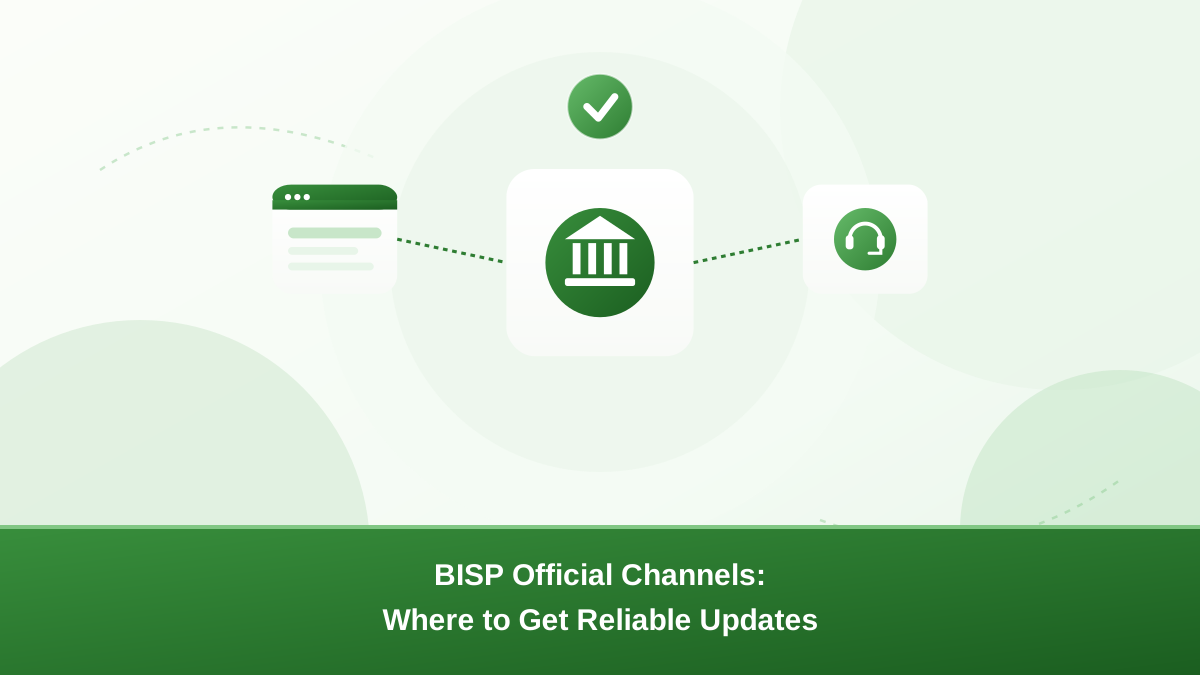
BISP works through a small set of official channels. Anything else, even a page that looks professional, needs to be checked before you trust it. The main channels are:
- The official BISP web portal — used for status checks, information, and official services. Always confirm the address from official sources before entering personal data.
- 8171 SMS status checks — the short-code service for checking your personal status by sending your CNIC from your registered mobile number.
- The official BISP helpline — a phone service for guidance and complaints. Confirm the current number from official sources before calling.
- BISP offices — the physical district and tehsil offices where documents, corrections, surveys, and complaints are handled in person.
- Official announcements — programme updates published through official channels, never through forwarded messages alone.
The official BISP website
The official web presence for BISP is bisp.gov.pk. This is the authoritative online source for programme information, announcements, and official services.
The official site uses a government domain that ends in gov.pk. Look for that ending before you trust a web address. Copycat sites often use similar names with different endings, such as .com or .net versions.
Use the official site to read current announcements, confirm helpline details, and check the status of programme activities. When you are unsure whether a page is genuine, compare it against bisp.gov.pk.
8171 SMS status checks
The 8171 SMS service is the most common way families check their personal status. You send your CNIC without dashes from your registered mobile number, and the system replies with your status.
This channel is for personal status — whether you are registered, eligible, or due for a payment. It is not a source of programme-wide news. The reply reflects the current record for your household only. It is one of the fastest official BISP channels for checking your own case.
Use it only from the mobile number registered with BISP. Never send your CNIC to another number, and never share the reply with someone who offers to check it for you. See our guide to checking eligibility on 8171 and the portal.
The official BISP helpline
BISP runs a helpline for guidance, complaints, and questions about your case. The number changes from time to time, so always confirm the current helpline number from an official source, such as the official website or a BISP office.
Call the helpline when you need a quick answer about a procedure, a complaint, or the next step in your case. Have your CNIC and any reference number ready before you call.
A genuine helpline operator guides you. They do not ask for money or OTPs. If someone on the phone demands payment or personal codes, end the call and report it. See our guide on using the BISP helpline safely.
BISP district and tehsil offices
BISP keeps physical offices in districts and tehsils across the country. These offices handle documents, registrations, corrections, surveys, and complaints in person.
An office visit is the best option when your case is complex, your status reply is confusing, or you need to submit documents. Bring your original CNIC, any previous BISP letters, and a reference or complaint number if you have one.
Confirm the address and visiting hours before you travel. Ask the office itself for the exact procedure for your case, since procedures differ by district and by programme phase. Read our guide to visiting a BISP office.
Official announcements and programme news
Programme-wide news, such as a new survey phase or a change in procedure, comes from official announcements. These are published through the official website and official helpline, and repeated by BISP offices.
Personal status and programme-wide news are different. Your 8171 reply tells you about your household. Official announcements tell you about the programme as a whole. Check both before you act.
Forwarded messages are not announcements. A genuine announcement can be confirmed on the official website or at a BISP office. Learn how to spot fake BISP news and read our programme update roundup.
How to tell an official source from a fake
Copycat pages, fake helplines, and lookalike websites are the most common fakes. You can tell them apart with a few checks:
- Start from a source you trust — a BISP office, an official letter, or the official portal.
- Check that web addresses match official domains and use secure connections. A government page ends in gov.pk.
- Watch the tone. Official messages are calm and factual. Fakes push urgency, guarantee payments, or promise new schemes.
- Never share OTPs, PINs, or bank details. No official process asks for these by phone, SMS, or message.
- For social media accounts and phone numbers, verify them against official announcements rather than viral posts.
- When in doubt, call a BISP office to confirm a channel or announcement.
How to use official BISP channels safely
Using official BISP channels safely is simple: keep your personal data close, never pay, and always verify. These habits protect you no matter which channel you use.
- Verify the channel first. Confirm the website address, helpline number, or office location from an official source.
- Use registered details. Send 8171 requests from the mobile number BISP has on file.
- Keep codes private. Never share OTPs, passwords, or PINs with anyone who contacts you.
- Never pay. Official checks and services are free. A fee request is a red flag.
- Report suspicious contact. If someone claims to be BISP and asks for money or codes, treat it as fraud and stop the conversation.
Cross-check before you trust
One source is not enough for important decisions. Cross-checking means confirming the same fact through two official channels before you act.
For example, check your status on 8171, then confirm a payment announcement on the official website. If the two agree, you can proceed with confidence. If they disagree, trust the official website or your BISP office.
Cross-checking also protects you from viral news. A claim that appears only in forwarded messages, and nowhere official, is probably false.
What to do when you are unsure
If a message, page, or caller claims to be BISP and something feels wrong, stop before you share anything. Do not reply with personal details, do not send money, and do not click links in the message.
Verify the claim through an official channel — the official website, the helpline, or a BISP office. If you cannot confirm it, treat it as unverified and ignore it. The only reliable fixes for your case come through official BISP channels.
If you already shared details or paid someone, report the incident to BISP through official channels. See our guide on reporting BISP scams and fraud.
This website, BISP Help, is an independent information resource. We are not an official channel. We point readers to official sources for verification and never claim to be BISP. See our disclaimer.
What to avoid
- Viral messages promising “new” payments with links to unofficial pages.
- Agents who offer to register, check, or “fix” cases for a fee.
- Sharing CNIC photos, OTPs, or bank details with anyone online or over the phone.
- Trusting a page just because it looks official or uses the BISP logo.
Conclusion
Official channels — the portal, 8171, the helpline, BISP offices, and official announcements — are the only reliable sources for your BISP case. Confirm before you trust, use the channels safely, and never pay for official services.
When in doubt, verify through official BISP channels before acting. A quick check protects your money, your data, and your payments.
Frequently asked questions
The main official channels are the official website bisp.gov.pk, 8171 SMS status checks, the official BISP helpline, district and tehsil BISP offices, and official announcements. Confirm any number or address from the official website before using it.
Send your CNIC without dashes to 8171 from the mobile number registered with BISP. The system replies with your household\u2019s status. If you do not receive a reply, contact the helpline or a BISP office.
Check the domain \u2014 official government pages end in gov.pk \u2014 and compare the content with the official website. Real BISP messages are calm and factual and never ask for OTPs, PINs, or payment.
No. Official BISP processes and checks are free. Anyone who asks for payment to register, check, or fix your case is a scammer. Report the contact to BISP.
Do not click links, share details, or send money. Confirm the claim on the official website or at a BISP office. If you believe you were targeted, report it through official channels.
No. 8171 is an SMS status-checking service, while the helpline is a phone service for guidance and complaints. Both are official, and neither will ask for OTPs or payment.